Some islands welcome visitors once. Skye draws them back.
Known in Gaelic as An t-Eilean Sgiathanach, or the Winged Island, Skye is the largest Inner Hebridean island.
Its coastline stretches for around 350 miles, with sea lochs cutting deep into the land. Meanwhile, the jagged Cuillin peaks dominate the skyline.
Many visitors reach Skye by bridge. However, arriving by sea offers a quieter connection to the island’s maritime past.
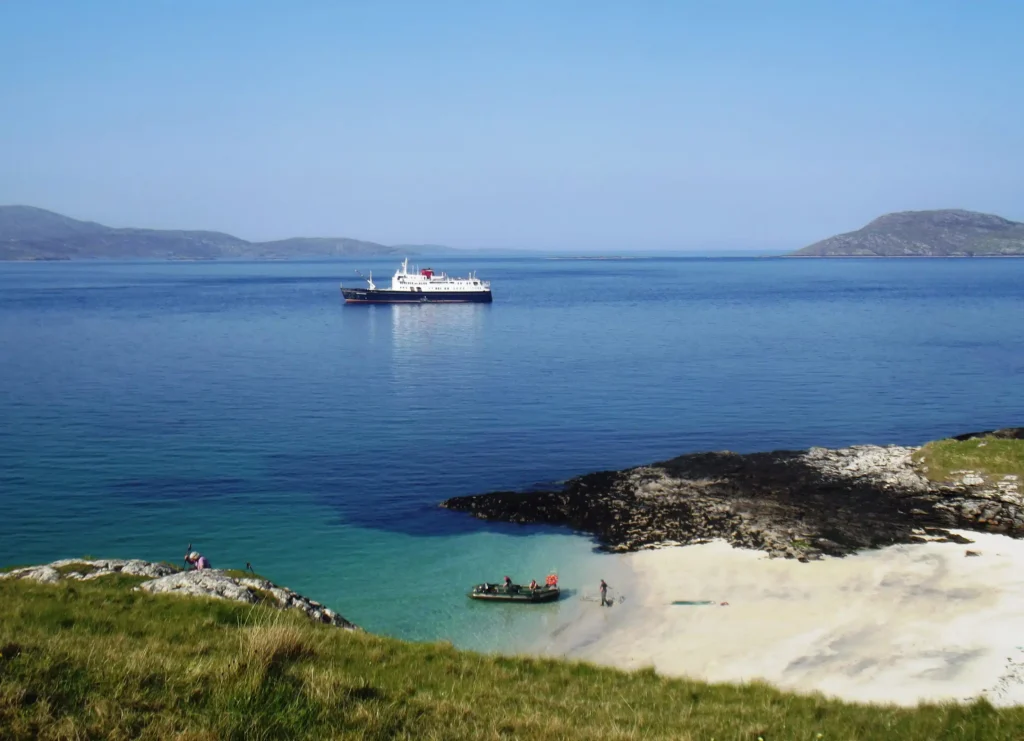
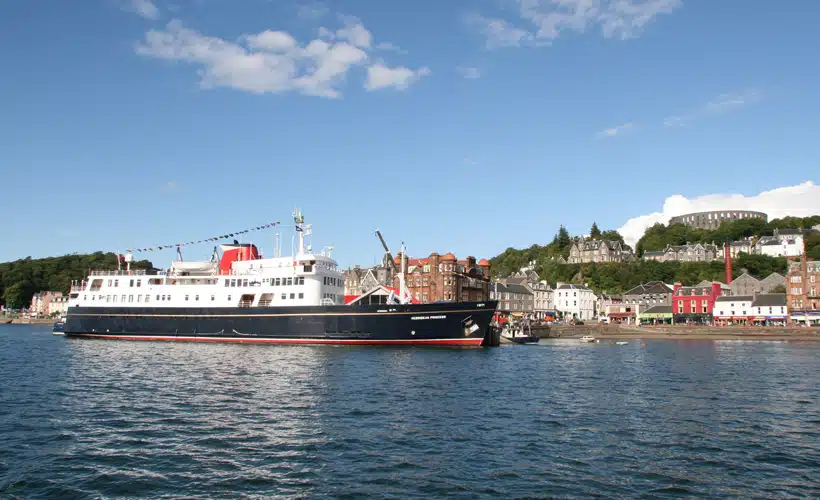
Hebridean Princess brings guests to sheltered harbours, remote sea lochs and coastal villages that many travellers never see.
Armadale offers a gentle introduction
Many cruises call at Armadale, on Skye’s green Sleat peninsula.
Locals often call Sleat the “Garden of Skye”. Nearby, the ruins of Armadale Castle stand among woodland gardens.
The Museum of the Isles explores Clan Donald’s history. The clan once held the title Lords of the Isles.
Across the Sound of Sleat, guests can admire the mountains of Knoydart. Together, the gardens and coastal views offer a peaceful first glimpse of Skye.
Reach Loch Coruisk by tender
Some Hebridean Princess itineraries continue around Skye’s coastline to places few visitors reach.
Loch Coruisk, whose name means “Cauldron of Water”, inspired painter J.M.W. Turner. Its remote setting makes access by land difficult.
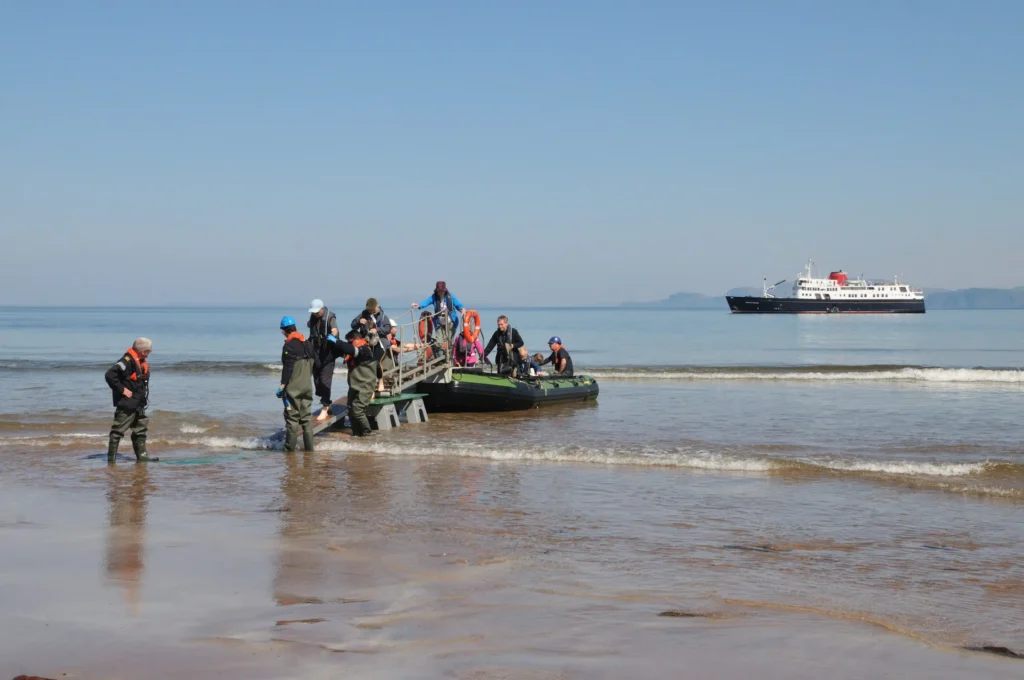
The ship anchors in Loch Scavaig, then tenders carry guests towards Elgol. From there, a short walk leads to the dark waters of the loch.
Mountains surround the water in a vast natural amphitheatre. As a result, Loch Coruisk offers one of Scotland’s most striking landscapes.
Discover Dunvegan Castle and Stein
Dunvegan Castle has served as the home of Clan MacLeod for around 800 years. It is Scotland’s oldest continuously inhabited castle.
Inside, visitors can see the Fairy Flag, a piece of silk linked to stories of miraculous powers.
Further along the coast, Stein offers a different perspective on island life. This small Waternish settlement looks across the bay from its whitewashed buildings.
The British Fisheries Society planned Stein as a fishing village. Architect Thomas Telford designed it in 1790.
Explore Uig and the Trotternish coast
Uig sits at the head of Uig Bay on the Trotternish peninsula. Its ferry links connect Skye with the Outer Hebrides, including Uist and Harris.
Trotternish also boasts some of Skye’s most recognisable landmarks. The Old Man of Storr rises above the landscape, while the Quiraing features dramatic volcanic formations.
At Kilt Rock, basalt columns drop towards the sea. Together, these landmarks create a memorable coastal route.
Visit Portree and hear Skye’s stories
Portree, Skye’s colourful harbour town, offers a lively stop between quieter coastal visits.
The town also connects with the story of Bonnie Prince Charlie and Flora MacDonald. According to local history, Charlie said farewell to Flora in Portree while fleeing capture.
Flora had helped him escape after the Jacobite defeat, disguising him as her maid. Their story adds another layer to Skye’s rich history.
Clan rivalries, the Jacobite Rebellion and the Highland Clearances have all shaped the island. Skye remains home to both Clan MacDonald and Clan MacLeod.
Find Talisker beside Loch Harport
Loch Harport lies near Carbost, home to Talisker Distillery. The distillery produces the island’s best-known single malt Scotch whisky.
Rugged hills frame the sea loch, while calm waters attract photographers and wildlife enthusiasts. Talisker’s peaty whisky has earned the nickname “the lava of the Cuillins”.
Return to an island of striking contrasts
Skye combines dramatic mountains, soft mists and long summer sunsets. Its old crofts, Gaelic culture and abundant wildlife add to the island’s enduring appeal.
Some roads cross single-lane stretches, but visitors can follow routes around Trotternish and along the Sleat peninsula.
Yet a voyage reveals another side of Skye. From Armadale’s gardens to Loch Coruisk’s remote waters, each landing offers a fresh reason to return.