
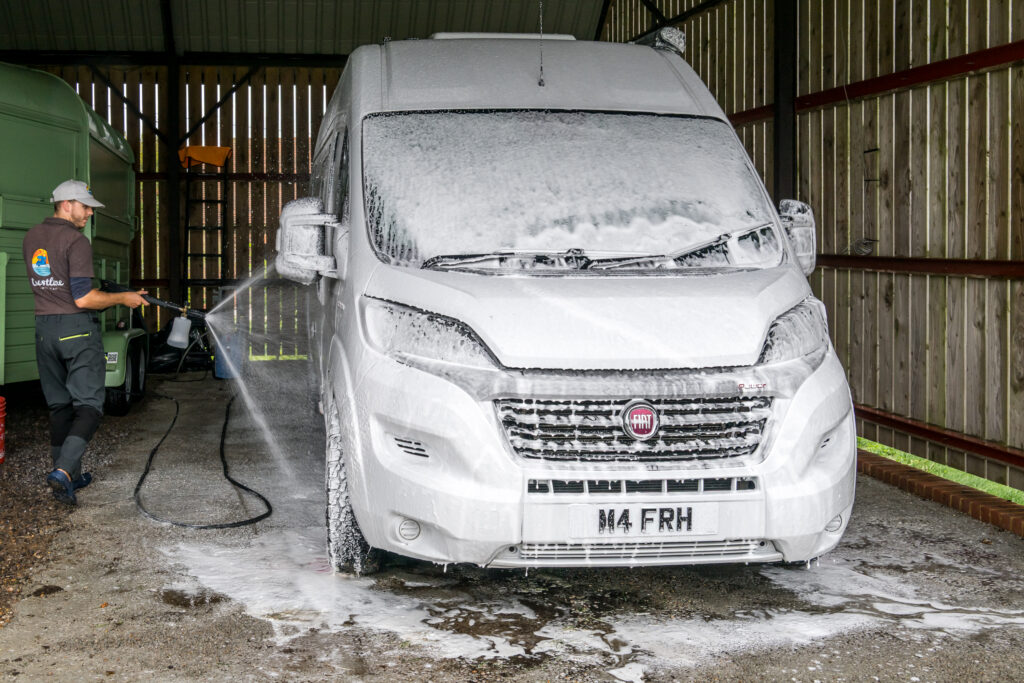
UK searches for “can you use washing-up liquid to clean a car” rose sharply on 16 November 2026, according to Google Trends daily data. Related search terms also climbed that day.
That question matters as winter gritting gets underway. Nicolas Diez, founder of Valetly, warns that washing-up liquid can remove protective wax or sealant from vehicle paint.
“Washing-up liquid is built to cut grease off a plate. That’s its whole job,” Diez says. “Your campervan’s wax or sealant is, in effect, a layer of grease sitting on the paint. So you’re using a degreaser on the one thing that’s meant to stay put. A couple of washes and it’s gone.”
How Washing-Up Liquid Affects Campervan Paint
Without wax or sealant, water no longer beads on the paint. Diez says he regularly sees vehicles where water sheets across the surface instead.
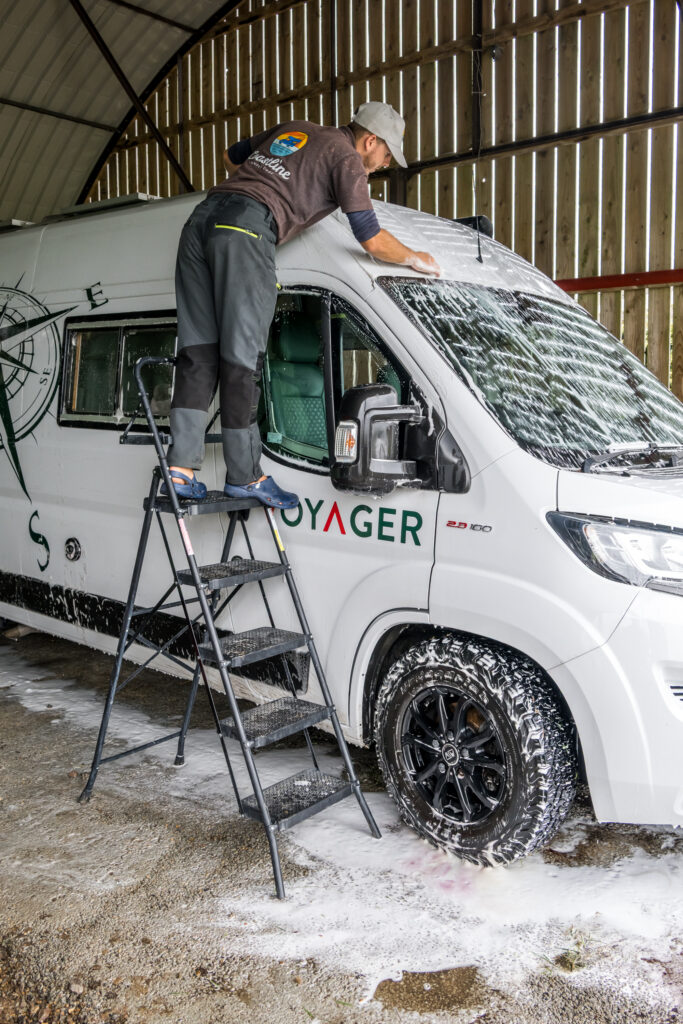
He says owners often report washing their vehicles with kitchen detergent. Repeated use can strip away the paint’s protective layer, leaving it exposed to winter grime.
Road salt adds another concern. It mixes with water and splashes into wheel arches, sills and the lower edges of doors. Without sealant, salty residue can linger on the paint and collect around stone chips.
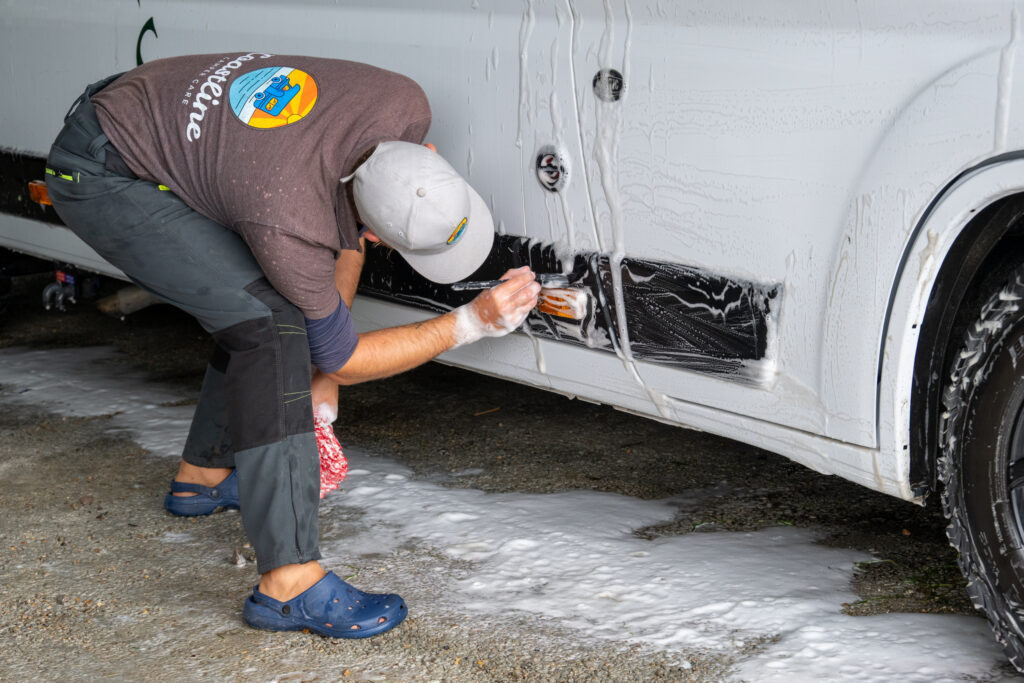
“Salt doesn’t eat paint overnight,” Diez says. “It gets into the chips and the edges and it stays damp. By February you’ll see a bubble starting under the paint on a wheel arch, and that’s the bit nobody notices until it’s a rust hole.”
He also notes that some washing-up liquids contain salt as a thickener. That means they may add residue while you wash away road grime.
How to Wash a Campervan Safely in Winter
Diez recommends using pH-neutral car shampoo, two buckets and a thorough rinse. First, rinse away grit before touching the paint with a wash mitt. Then apply shampoo and rinse again.
Avoid letting the shampoo dry on the vehicle. Diez also recommends applying a spray sealant while the surface remains wet.
“Rinse first. Get the grit off with the hose before a mitt goes near it. Then shampoo, then rinse again,” he says. “If you can only do one extra thing, put a spray sealant on while it’s still wet. Takes five minutes.”
Pay particular attention to the areas road salt reaches first. Rinse wheel arches, sills and the bottom of each door every fortnight through winter, Diez advises.
“The roof and sides get all the love. The salt’s underneath,” he says. “That’s where the money goes if you ignore it.”
Does One Wash with Washing-Up Liquid Damage a Campervan?
Diez says one wash will not cause lasting damage, but it can remove existing protection. Owners should restore that protection with suitable wax or sealant.
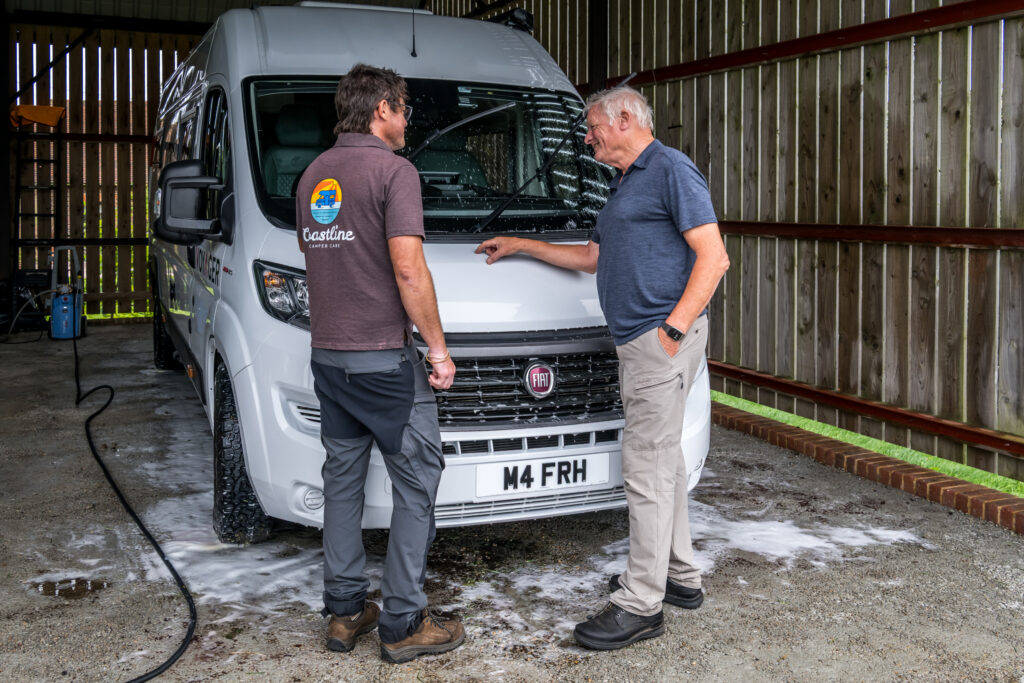
Repeated washes can leave paint unprotected during the months when road salt and damp conditions pose a greater concern.
Sources and Resources
- Valetly, mobile car valeting and detailing across the UK.
- Google Trends, UK daily rising searches, 16 November 2026: “can you use washing up liquid to clean a car”.
- This article adapts material licensed under Creative Commons Attribution 4.0 International. Credit Valetly and link to its website when sharing or adapting the material.